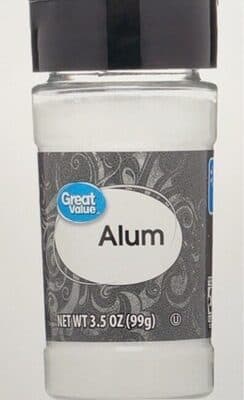
What is Aluminum Potassium Sulfate?
Aluminum potassium sulfate (CAS Number: 7784-24-9), commonly referred to as alum or potash alum, is an inorganic double sulfate salt. It appears as colorless crystals or white powder and is highly soluble in water. The chemical compound forms when aluminum sulfate and potassium sulfate are combined, creating a stable crystalline structure used in various industrial and food applications.
Common Uses
In food processing, aluminum potassium sulfate serves multiple functions. Its primary role is as a firming agent in pickling and vegetable processing, helping maintain the texture and crispness of cucumbers, onions, and other vegetables during preservation. It functions as a pH control agent, helping regulate acidity levels in food products to maintain stability and shelf life. The additive is also used as a processing aid in water treatment during food production and has limited use as a fumigant in stored grains and dried fruits. Typical applications include pickle production, canned vegetables, and baking powder formulations.
Safety Assessment
Aluminum potassium sulfate has been used in food processing for over a century with an established safety record. The FDA has designated this additive as Generally Recognized As Safe (GRAS), meaning it is considered safe for use in food when applied appropriately. According to FDA records, there have been zero reported adverse events associated with this additive and zero food recalls attributed to its presence.
The European Food Safety Authority (EFSA) has also evaluated aluminum compounds used in food processing. The safety assessment focuses on total dietary aluminum exposure from all sources, including this additive, soil residues on vegetables, and other foods. When used at typical food processing levels, aluminum potassium sulfate contributes minimally to overall aluminum dietary intake.
The additive is generally recognized as having low bioavailability when ingested through food. Most aluminum from food sources passes through the gastrointestinal tract without absorption, particularly in individuals with normal kidney function. The quantity used in food applications is typically small and tightly regulated.
Regulatory Status
Aluminum potassium sulfate is approved for use in the United States under FDA regulations, specifically listed as GRAS for use as a firming agent in certain vegetables and as a processing aid. The Code of Federal Regulations (CFR) permits its use with specific limitations on maximum levels depending on the food category.
In the European Union, aluminum compounds including aluminum potassium sulfate are regulated under EU Regulation 1333/2008. They are approved as food additives with E-number designations and specific permitted uses and maximum levels.
Canada's Food and Drug Regulations also permit aluminum potassium sulfate for certain food applications, subject to specific conditions and maximum residue levels.
Key Studies
Scientific literature on aluminum potassium sulfate in food applications indicates that the additive effectively maintains texture in processed vegetables without significantly altering nutritional profiles. Research on aluminum dietary exposure has consistently shown that food additives represent a minor contribution to total aluminum intake compared to natural sources.
Toxicological studies on aluminum salts used in food have not demonstrated adverse effects at levels relevant to food use. The additive's safety profile has remained stable over decades of surveillance data collection by regulatory agencies worldwide.